Commercial Cleaning: A Practical Guide for Businesses
A facility may look presentable while neglected restrooms, contaminated touchpoints, and embedded floor soil create operational problems. For business owners, a commercial cleaning plan provides the structure, trained labor, and sanitizing processes needed to manage those risks consistently.
This guide explains how to define services, measure performance, evaluate providers, and avoid costly scope errors.
What Commercial Cleaning Means
Commercial cleaning is professional cleaning for offices, stores, healthcare settings, schools, warehouses, and other business facilities. It combines routine cleaning with scheduled deep cleaning and specialty services. Janitorial services usually emphasize recurring duties such as floor care, mopping and trash removal or recycling, although cleaning industry terminology often overlaps.
Routine cleaning controls daily dirt; deep cleaning reaches neglected surfaces; specialty cleaning addresses materials or hazards requiring specific equipment, products, or PPE. Businesses should expect better hygiene, a professional appearance, and lower contamination or slip risks.
Regular commercial cleaning can reduce workplace hygiene risks by lowering germ spread and improving surface cleanliness, while routine cleanup of spills, wet floors, cluttered walkways, and high-traffic corridors can help reduce slip-and-fall risk.
Commercial Cleaning vs Janitorial Services
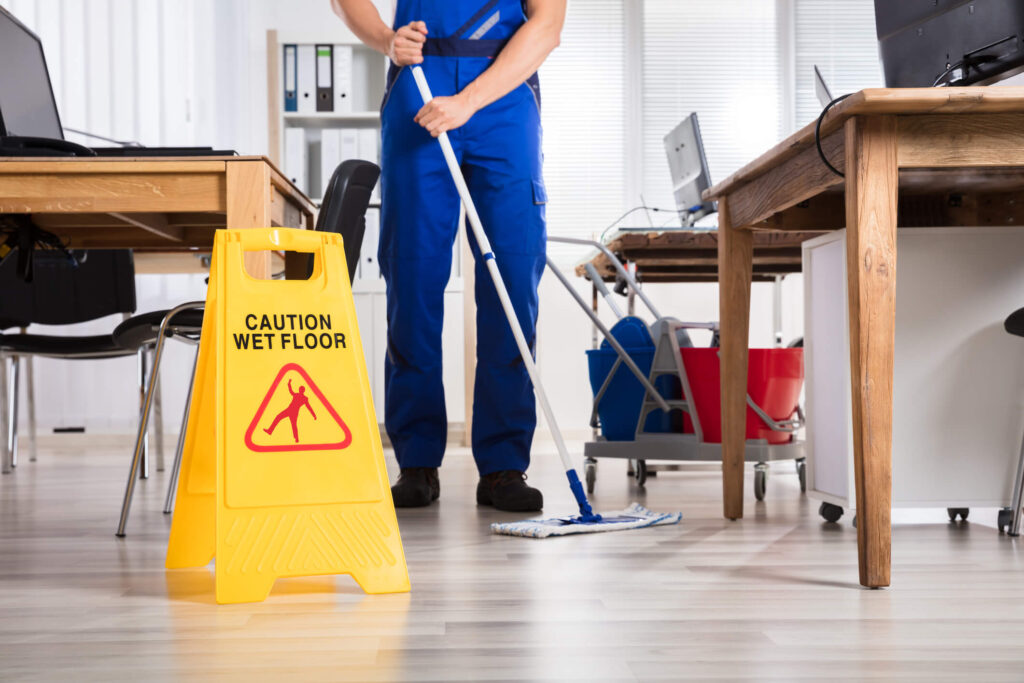
Commercial cleaning commonly combines recurring care with scheduled projects such as glass cleaning or floor care. For a fuller distinction, review this guide to commercial vs janitorial cleaning in Knoxville, TN – Difference Between Janitorial Services and Commercial Cleaning.
Who Uses Commercial Cleaning
Offices, healthcare facilities, retailers, schools, warehouses, and industrial sites have different traffic patterns and cross-contamination risks. For example, commercial cleaning for educational facilities requires closer attention to shared desks, restrooms, and high-contact areas.
Compliance requirements often determine cleaning methods, while customer experience influences visible areas and service frequency. A warehouse may prioritize indoor air quality and floor care, whereas a medical office needs stricter contamination controls such as sanitizing and disinfection.
Services Included: Build the Right Scope of Work
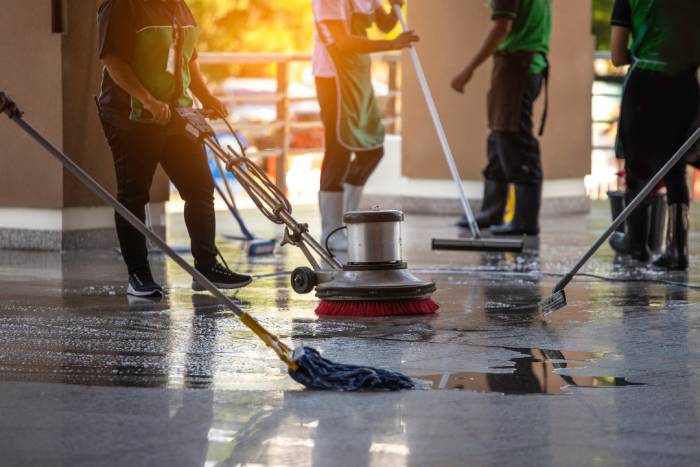
Typical services and a practical scope should include restroom cleaning, trash removal, breakroom cleaning, high-touch surfaces, glass cleaning, dusting, carpet cleaning and hard floor cleaning.
Periodic services may include carpet extraction, floor stripping, floor waxing, high dusting, window cleaning, post-construction cleaning or disinfection. Businesses comparing a commercial cleaning service in Knoxville should confirm which services are standard and which are extra.
Daily and Weekly Essentials
Daily priorities usually include restroom cleaning, supply replenishment (e.g. paper towels, toilet paper, hand soap), odor control & trash removal. Touchpoint cleaning should cover handles, switches, shared equipment, and other surfaces selected through an actual risk assessment rather than an indiscriminate building-wide routine.
Weekly work can address partitions, baseboards, interior glass, detailed dusting, and low-traffic floors.
Periodic and Specialty Services
Floor schedules should reflect traffic, flooring material, weather, and manufacturer guidance rather than a fixed calendar alone. A high-traffic carpet may need more frequent extraction.
After-hours work may reduce disruption and allow floors or treated surfaces to dry. It also gives technicians better access to workstations and shared spaces.
Seasonal changes, an outbreak, an event, a move-in cleaning, move-out cleaning, or an audit can trigger deep cleaning.
How to Set Standards: Frequency, Checklists, and KPIs
A usable scope of work assigns tasks and frequencies room by room, identifies exclusions, and defines who supplies equipment and consumables.
Frequency depends on traffic, layout, operating hours, and industry risk. Industry guidance commonly recommends cleaning standard offices three to five times per week, with daily service for larger or higher-traffic spaces, while restrooms should be cleaned at least daily and more often when usage is heavy.
Detailed dusting, glass cleaning, edge vacuuming, and breakroom cleaning are commonly scheduled weekly, while deep cleaning is often planned every three to six months.
Quality control should track an inspection score, rework rate, complaint volume, and response time. Supervisory audits, photographs, service logs, and documented corrective actions reveal whether recurring defects reflect training, staffing, or scope problems.
Create a Cleaning Checklist That Actually Works
Divide the checklist into areas e.g. restrooms, storage, and kitchen cleaning. Each task should state the product, tool, method, and frequency so different technicians can produce comparable results.
Disinfection instructions must include the required contact time, also called dwell time or wet time, from the product label.
Choosing a Commercial Cleaning Provider: A Step-by-Step Vetting Process
In-house teams offer direct control, while contracted providers can supply broader coverage, specialized equipment, and replacement staffing. The correct model depends on management capacity, facility complexity, and the full cost of recruitment, supplies, supervision, and training.
Begin with a written scope, then verify training, insurance, OSHA compliance, supervision, quality control, hazard communication procedures, chemical training, and access to every safety data sheet. Compare proposals by staffing and expected outcomes rather than price alone.
Questions to Ask Before You Sign
Ask about employee training, background checks, supervision, the service level agreement, and if they are bonded and insured. Whether they bring in their own cleaning equipment and what kind of materials they use e.g. eco-friendly cleaning products.
Pricing and Contracts: What Drives Cost
Pricing depends on square footage, occupancy, traffic, floor types, restroom count, service frequency, security procedures, and specialty add-ons. An on-site walkthrough produces a more defensible quote than square footage alone because two equal-sized buildings can require very different labor.
Contracts should document frequencies, exclusions, add-on prices, change-order procedures, renewal terms, and termination rights.
Common Mistakes (and How to Avoid Them)
The lowest proposal is not necessarily the lowest operating cost if weak staffing creates complaints, rework, or damaged surfaces. Compare providers using labor assumptions, supervision, quality controls, and measurable outcomes.
Vague scopes create disputes because phrases such as “clean floors” do not define methods or frequency. Incorrect chemicals and tools can also discolor finishes, damage carpet fibers, or create unsafe residues.
A Simple Example: Office Reset After Sick Season
An office reset might combine targeted touchpoint disinfection, restroom deep cleaning and detailed vacuuming. A winter commercial cleaning checklist for Knoxville can help identify seasonal moisture, tracked soil, and high-contact priorities.
Management can compare before-and-after inspection scores and volume of service tickets to judge effectiveness. Measured improvement provides stronger evidence than appearance alone.
Green Cleaning Without the Greenwashing
Specify independently certified products, accurate dilution control, reusable materials where appropriate, and equipment suited to the surface. Concentrated products are not inherently greener if over-dilution, under-dilution, or poor application causes repeat work.
TruePro Cleaning Services
We serve within 30 miles of Knoxville, TN